There is a connection between the economic meltdown that is bringing the economies of the world to their knees and the swine flu. The connection is deregulation. Many are now calling the swine flu the NAFTA flu because it is believed to have started on a pig farm in Mexico owned by the US pork giant Smithfield Farms. The first known case of the swine flu was in the Mexican town of La Gloria, near the farm. Hundreds of other people in that town were infected.
In 1985, Virginia-based Smithfield Farms was fined by the EPA for dumping toxic hog waste into the Chesapeake Bay. In 1994, soon after the North American Free Trade Agreement (NAFTA) was signed, Smithfield Farms moved its operations to Mexico, where it would not have to follow strict environmental regulations. This move not only cost the US jobs but may now have cost us our health.
The Smithfield Farms facility in Mexico is an environmental nightmare. A Mexican paper described it as, “Clouds of flies emanate from the rusty lagoons where the Carroll Ranches business tosses the fecal wastes of its pig farms.”
Deregulation similarly affected the financial industry in the US and brought down the rest of the world’s economies. It was the repeal of the Glass-Steagall act in 1999, a law geared to protect bank deposits from the speculative activity of investment bankers that contributed to the present economic crisis. It was congressional legislation forbidding the regulation of exotic financial dealings like Collateralized Debt Obligations(CDOs) and Credit Default Swaps (CDS) that put our economy at risk.
Yet, there has been no move to repeal NAFTA, reinstate Glass-Steagall, or outlaw CDOs or CDSs. Instead we ask working people to weather the flu and give our tax dollars to bail out the financial institution, so they can keep doing what caused the crisis in the first place. Instead of stopping the evils of unbridled capitalism, we ask state workers to accept layoffs, pay lags, and wage freezes. Perhaps its time to rethink these policies.
Wednesday, May 6, 2009


Wednesday, April 15, 2009
Pirates, Terrorists and War Lords
Although we are all relieved by the release of Captain Richard Phillips from his Somalia captors, there seems to be much more to the story than is being reported. First of all, Captain Phillips' ship, the Maersk Alabama, is part of the fleet owned by the Denmark-based Moller-Maersk company, which is one of the US Department of Defense’s primary shipping contractors. However, according to the DoD, it was not under contract at the time it was overtaken. But the Maersk Alabama, a ship used by the US DoD and carrying an all American crew, was supposedly delivering food aid to Kenya and going right through the so called pirate infested waters off Somalia. Why did they not simply avoid those waters? Some have suggested that it was a provocation, done as a prelude to a US military intervention on the horn of Africa. As former UN Ambassador John Bolton said on April 11, we need a “coalition of the willing” to invade Somalia.
Other important questions are, who are these pirates? Why do other countries not have such bands of pirates? Recently, a New York Times article quoted one of them, Sugule Ali, as saying, “We don’t consider ourselves sea bandits...we consider sea bandits those who illegally fish in our seas and dump wastes in our seas and carry weapons in our seas.” Every country claims 12 miles beyond its shores as its territorial waters and an additional 250 miles as its “exclusive economic zone.” Each country is allowed to control all economic activities in these waters.
After the Somali civil war in the late 1980's, the central government was no longer able to patrol and control activity in these waters. Fleets from other countries started fishing in this area, devastating the Somalia fishing industry; other countries started dumping industrial waste off the Somalia coast, including nuclear waste that sickened the coastal populations. Around that time, the Somalia fishing cooperatives banded together to patrol their waters and save their industry and people. Instead of the US and other advanced countries' condemning and stopping the illegal activities of other countries off the Somalia coast, they branded the Somalian protectors as "pirates," and they are now on a full scale campaign to stop them.
The word pirate is just one in a growing lexicon used by our government and the media to sway public opinion. If we don’t like a government, its leaders are "war lords." If a band of people don’t like what the US is doing in their country and try to stop it, they are "terrorists," and if fishing cooperatives band together to protect their territorial waters, they are "pirates."
Certainly, some of these so called pirates are out for their own economic gain. But there is illegal activity in all devastatingly poor areas around the world, including in inner cities of the US. Using strong-armed tactics against the Somalian people will never correct the situation, because it doesn’t deal with the underlying problem of the wealthy nations taking advantage of the poor.
Other important questions are, who are these pirates? Why do other countries not have such bands of pirates? Recently, a New York Times article quoted one of them, Sugule Ali, as saying, “We don’t consider ourselves sea bandits...we consider sea bandits those who illegally fish in our seas and dump wastes in our seas and carry weapons in our seas.” Every country claims 12 miles beyond its shores as its territorial waters and an additional 250 miles as its “exclusive economic zone.” Each country is allowed to control all economic activities in these waters.
After the Somali civil war in the late 1980's, the central government was no longer able to patrol and control activity in these waters. Fleets from other countries started fishing in this area, devastating the Somalia fishing industry; other countries started dumping industrial waste off the Somalia coast, including nuclear waste that sickened the coastal populations. Around that time, the Somalia fishing cooperatives banded together to patrol their waters and save their industry and people. Instead of the US and other advanced countries' condemning and stopping the illegal activities of other countries off the Somalia coast, they branded the Somalian protectors as "pirates," and they are now on a full scale campaign to stop them.
The word pirate is just one in a growing lexicon used by our government and the media to sway public opinion. If we don’t like a government, its leaders are "war lords." If a band of people don’t like what the US is doing in their country and try to stop it, they are "terrorists," and if fishing cooperatives band together to protect their territorial waters, they are "pirates."
Certainly, some of these so called pirates are out for their own economic gain. But there is illegal activity in all devastatingly poor areas around the world, including in inner cities of the US. Using strong-armed tactics against the Somalian people will never correct the situation, because it doesn’t deal with the underlying problem of the wealthy nations taking advantage of the poor.
Tuesday, March 24, 2009
Protests on the 6th Anniversary of the Iraq Invasion

The March 21 anti-war rally in Washington was an important success, but smaller than past rallies. It was very important that it happened because if not, there would have been no national action on the 6th anniversary of the war in Iraq in the country that is responsible for the war, the US. Actions also took place in San Francisco and Los Angeles as well as several other places. Other important features of the march were the diversity and youthfulness of the demonstrators.
We had a bus from Albany. There were also a few from Albany who could not get on our bus and went with a bus from Kingston, some left from the Yankee Trails bus barn in East Greenbush. Other area buses that I am aware of are 2 from Rochester, 1 from Ithaca, 1 from Syracuse and 3 from Hartford. Our bus included a number of students from SUNY, Siena and Bethlehem High School. About half of our bus was students. A number of others from our area came down by their own means and I saw several at the rally.
The march was very long and took us past a number of corporate war profiteers where we left coffins to show the effects of their work.
At the demonstrations there were provocations, ostensibly organized by anarchists. Below is a quote from a report by Jerry Gordon, a central leader of the National Assembly, based upon a discussion with Brian Becker, a leader of the ANSWER coalition.
“In D.C., San Francisco and Los Angeles, there were planned provocations ostensibly conducted by anarchists but actually the work of police agents and the Feds. In D.C. this group put up a mesh fence which prevented marchers from passing without doing a detour around the obstruction. Those participating in the provocation yelled out slogans denouncing and redbaiting ANSWER and other forces as racists. But when the march reached the corporate headquarters of one of the big plane manufacturers, five of the "anarchists" showed their police credentials and were admitted into the building. Pictures of this were taken by demonstrators and when this was discovered, a frantic but unsuccessful effort was made by the cops to seize the pictures. In the course of this, a cop had a gun pointed only inches from Brian's face. ANSWER has the pictures and will launch an initiative to pull together a coalition of civil liberty groups to cope with and expose an evolving trend of federal law enforcement and local police activity designed to disrupt peaceful antiwar demonstrations”
Besides the importance of the national peace movement demonstrating on the 6th anniversary of the war, I believe that building the demonstration was essential for the peace movement. It was difficult to build the rally even though sentiment in this country against the wars has never been greater. People organizing the rally nationally like ANSWER and the National Assembly, which I was working with, understood that the rally would be smaller because of the political period that we are in. Obama is still in his honeymoon period with the American people who are convinced, in their majority, that he is ending the war in Iraq. There also appears to be less violence in Iraq. The government and media attribute this to the surge; however, most observers in the peace movement understand that it has to due with other factors including the success of US government’s tactic of divide and rule. This has manifested itself in Iraq through outright bribery of Sunni leaders outside of Baghdad and ethnic cleansing in Baghdad. The ethnic cleansing has reduced the population of Baghdad from roughly 50% Sunni to 10% Sunni. It has caused millions of refugees and thousands of deaths. Additionally, I think other factors contributed to the size of the rally including the economic meltdown which has dominated the media and the thinking of the American people. Also, as you know, the divisions in the anti-war movement have had an effect as UFPJ moves away from the issue of the wars and the bitter split between ANSWER and UFPJ continues. It will take some time for these factors to play out.
If there was no national demonstration on the anniversary of the invasion of Iraq, the anti-war movement would become invisible. It would go into retreat and have to be rebuilt at a future date. As it stands now, the organizing for this demonstration has kept the issues in front of the American people and helped build a new young leadership for our movement that is beginning to step forward. In July, the National Assembly will hold its second nation conference. All national and local anti-war groups will be invited. As with the first conference anyone who comes will have voice and vote. Here we hope to assess where the anti-war movement is and how to move forward. If you are interested in coming to this conference in Pittsburg, please let me know.
Peace,
Joe Lombardo
Sunday, February 8, 2009
Battered Women, Child Custody and the Progressive Movement
Over the weekend of January 9th – 11th, 2009, I attended the 6th Annual Battered Mothers Custody Conference in Albany, NY. I had also attended the previous five conferences. Each conference was organized by my partner, Dr. Mo Hannah, a professor of psychology at Siena College, near Albany.
I have been a political activist all my life. I grew up in a family of political activists, and I have devoted my entire life, as my parents did, to making the world a better place. During my journey, I have learned much that is deplorable about our government and its institutions. Yet even I had a hard time believing the cruelty and injustice of the family court system toward battered mothers and their children, which this conference is dedicated to exposing. Today, I am a believer.
The stories I heard each year at the conference go something like this:
I was in an abusive marriage and finally found the courage to leave. I was living in fear of my husband but afraid to leave. I didn’t know what he would do to me and I had no means to live on my own. But, when I discovered that he was abusing our daughter, I knew I had no choice. I came to the shelter and I filed for divorce.
In the course of the divorce hearing, when I told the judge of the abuse that my daughter and I suffered at my husband’s hands, he seemed skeptical. Although he seemed to understand that there was some abuse, he said that he did not see a “pattern” of abuse and thought I was “overreacting.” I was accused of “parental alienation,” meaning he thought that I was trying to keep my child away from her father out of vindictiveness. As a result, my husband was given custody of our daughter and I was given supervised visitation.
When they came to get my daughter and bring her to her father, she tried to hold onto me and she cried and begged me to not let her go. I tried not to cry and told her I would do everything I could. When she left, I did to cry, and I still cannot stop crying. How can they prevent me from protecting my daughter? How can I survive knowing what she is suffering at the hands of her abuser, and I am not allowed to help her?
You can hear some of these mothers telling their stories at: http://www.youtube.com/watch?v=5viwjaIorU8
One such story at this year’s conference was told by Jennifer Collins (http://americanchildrenunderground.blogspot.com/). Jennifer is a 22 year old woman who survived this kind of experience as a child. When she told her mother that her father was hurting her and her brother, her mother, Holly, told this to the judge. The judge told Holly that she was “overreacting,” probably because she was abused herself as a child. Jennifer, who was seven years old at the time, and her brother were taken from their mother and given to their father. Jennifer described the abuse in her father’s home including the time her father broke her brother’s skull by knocking his head against the wall. Holly was given supervised visitation. At one visit, when Jennifer told her mother that her father was hitting her and showed her mother the bruises, the supervisor told Jennifer that she cannot talk to her mother about that. After 18 months, Jennifer and her brother snuck out of their father’s home and found their way to their mother’s house. Their mother took the kids and ran. Eventually, she was discovered in the Netherlands. The US demanded Holly’s extradition in order to prosecute her for child kidnapping. For three years, she fought the extradition while she and her kids lived in a Dutch refugee camp with refugees from Somalia and other repressive governments. After three years, the Dutch government granted them asylum.
Jennifer is now a 22-year old adult who travels throughout the United States speaking out against family court injustice. She has formed an organization of adult children who have “aged out” of the court system’s jurisdiction. The name of her organization is “Children Against Court Appointed Child Abuse – CA3” (www.ca3cacaca.blogspot.com/ ). A similar organization called Courageous Kids (www.courageouskids.net) was formed several years earlier by other adult child victims. Several members of the Courageous Kids group were at this and previous conferences.
Why?
For many who hear about these travesties the question is, why? Why would the courts respond to domestic violence victims this way? The question of “why” is always difficult to answer because those running the courts, and judges, like other abusers, deny the abuse and therefore see no need to explain their actions.
The most important thing allies of abused women and children can do for them is to keep on believing them. It took a very long time for the criminal courts to believe the victims of domestic violence or rape. They would often blame the victim or dismiss the case as a “domestic situation,” telling the parties to go home and resolve their issues. This has changed somewhat in the criminal courts over the past two decades, largely due to the women’s and domestic violence movements. But the family courts still have a long way to go.
In custody situations, the presumption once was that the mother would get custody because she was the primary care giver for the children. That has now changed. In the overwhelming majority of cases the mother is still the primary care giver but the courts have changed from the presumption that the mother should have custody to a presumption that it is better for the children if both parents have equal access to the children. This is fine when there are two loving and caring parents, but when the children are used as pawns in on-going disputes between the divorcing parents or when there is domestic violence or child abuse involved, equal access and joint custody are the exact wrong solutions.
We live in a country facing tremendous economic and social pressures, a society that glorifies violence and remains in a state of almost perpetual war. These features have contributed to the epidemic of domestic abuse we see today. However, family courts continue in their refusal to acknowledge this reality, and judges with no understanding of domestic violence continue to re-victimize battered mothers and their children with their disastrous court decisions.
A woman who has been abused is not only hurt physically but also mentally and emotionally. Many display symptoms similar to the Post-Traumatic Stress Disorder symptoms that soldiers returning from war zones exhibit. When these women go before a judge and are confronted with the possibility that their children may be taken from them and given to their abuser, they often become emotional. The abusive partner, on the other hand, may come across as cool, calm, and logical. While the mother’s emotion may be taken as a negative, if the father shows emotion it is usually viewed far more sympathetically as if it shows he is a good father and cares about his children. The judge may, therefore, see him as the better parent.
All through the family courts there is a double standard that works against mothers. If she is emotional, it's a negative; if she is not emotional, it's also a negative. If she has a job, she cares more about her work than about her children; if she doesn't work for a living, she's seen as unable to adequately provide for her children. If she does not fight to keep her children away from the abuser, she is accused of "failure to protect"; if she does fight for them, she is seen as trying to alienate the children from their father or not being open to his having "equal access" to them. Protective mothers find themselves in a Catch 22 hell in family court.
Parental Alienation Syndrome
The rationale often used for taking children away from a protective mother and giving them to an abusive father is called "parental alienation syndrome" (PAS). Parental alienation syndrome is the invention of an anti-Semitic, quack, now-deceased psychiatrist named Richard Gardner. PAS is based on pseudo-science and not accepted as a credible syndrome by any of the relevant psychiatric or psychological associations. While it is possible for one parent to speak badly of the other in the course of divorce proceedings and probably happens often, to claim that this is a psychological syndrome, a "disorder" that makes its sufferer an unfit parent is both fraudulent and absurd. Gardner actually claimed that PAS does more damage to children than real physical and sexual abuse.
PAS is almost never used against men. It is not uncommon for abusive fathers to claim that they are not abusive and that the mother is only saying so to discredit them in the course of the custody hearing. According to an American Psychological Association's report of a Massachusetts Supreme Judicial Court’s study, “Fathers who batter the mother are twice as likely to seek sole physical custody of their children than are nonviolent fathers.” Various other studies report that these men will get custody in anywhere from 33% to 70% of the cases, depending on the study. In these cases PAS is typically used to support their position.
The Father Supremacy Movement
PAS is championed by the so called Fathers Rights movement (FRs), also known as the Father Supremacy movement. These groups claim that men are as likely as women to be victims of domestic violence--this despite U.S. Dept. of Justice statistics that show women as the victims of domestic violence in 86% of cases. FRs claim that most reports of domestic violence are false and that these false claims, rather than domestic violence, are the real problem. However, numerous studies have shown that false claims of rape or domestic violence are uncommon. The Father Supremacy groups direct batterers towards legal services that will help them build a PAS argument in their cases and teach them how to use their typically superior financial positions to harass their former partners through the court system, driving them into bankruptcy in their quest to hurt these women the most--by taking their children away from them.
Many men who have gone through a divorce, including this author, are repulsed by the belligerent, vindictive, anti-women tone of these organizations and their many web sites. These groups are organized remnants of the fight against equality for women. They are throwbacks to a time when women and children were considered the man’s property. These men become incensed when “their” woman stands up to them on behalf of herself and her children. This anger is what drives these groups: one of the last vestiges of male supremacy in our society. Unfortunately, these men all too often find a receptive ear in the family court system.
The case of Barry Goldstein
Sometimes family court judges go so far as to discipline lawyers for vigorously defending protective mothers. Such is what happened to attorney Barry Goldstein, who has defended many victims of domestic violence and has been a tireless advocate for them inside and outside the courtroom.
Barry was, for awhile, the attorney for Genia Shockome, a protective mother living in Dutchess County, New York. Genia is a Russian born engineer whose ex-husband, Tim Shockome, had two prior foreign brides before he married Genia. They had two children together before Genia filed for divorce and custody of the children, stating that he had been abusing her for years. At one point, he was convicted in criminal court for harassing her, but in family court, he was able to use Parental Alienation against Genia, and he eventually won sole custody of the children. The case was described in an article in Newsweek magazine (http://www.newsweek.com/id/35157).
At one point, while 8 month pregnant, Genia was appearing on her own behalf in front of the family court judge, who ruled that her ex-husband could move away with the children to Texas. After Genia persisted in objecting to the judge's ruling thinking she was establishing a record for an appeal, the judge ordered her jailed for one month. Barry then posted an article on an internet blog criticizing the judge’s action.
In retaliation, this same judge filed attorney disciplinary charges against Barry, claiming that his statements on the blog were false. The appellate court of the State of New York convicted Barry of this and other charges and suspended Barry's license to practice law for an astonishing five years. The message this sends to other attorneys in these cases is don't defend your clients too strongly and you don't have first amendment rights to speak to the public if the court disagrees with what you are saying.
At the Sixth Battered Mothers Custody Conference, a resolution supporting Barry Goldstein and condemning the decision of the appellate court was proposed and passed. The text of the resolution, signed by the Battered Mothers Custody Conference, the National Coalition Against Domestic Violence, and NOW New York State, was sent to the justices of the appellate court, the New York State Attorney General and the Governor of New York.
The Progressive Movement, Domestic Violence, and Child Custody
The issues addressed by the Battered Mothers Custody Conference that are affecting thousands of women today are not typically addressed by the progressive movement in this country but ought to be. Some may believe that these issues are personal, not political. The same justification was used by many progressives in the early days of the women’s movement. Today, however, we understand that much of what is considered personal is political. Those of us who fight for social justice are motivated by the image of a society where there is true equality. We envision a world where people are not driven by economic needs, fear and insecurity, which play a big part in divorce proceedings. In such a society human relations will change; Violence would be an anathema. In such a society, the need of the small elite, who rule today, to divide and conquer, will wither away and equality for all will become the norm. In such a society, the concept of the family will change as will divorce and custody issues. However, the fight to achieve such a society is embodied in each and every struggle for equality and justice--including the struggle on behalf of protective mothers and their children.
The web site for the Battered Mothers Custody Conference is http://www.batteredmotherscustodyconference.org/. I urge those in the peace and justice movement and other progressive causes to go to the web site, consider attending the next conference and to use the weight of your organizations to support women in your community who are facing this abuse from their partner or the family court system.
Joe Lombardo
I have been a political activist all my life. I grew up in a family of political activists, and I have devoted my entire life, as my parents did, to making the world a better place. During my journey, I have learned much that is deplorable about our government and its institutions. Yet even I had a hard time believing the cruelty and injustice of the family court system toward battered mothers and their children, which this conference is dedicated to exposing. Today, I am a believer.
The stories I heard each year at the conference go something like this:
I was in an abusive marriage and finally found the courage to leave. I was living in fear of my husband but afraid to leave. I didn’t know what he would do to me and I had no means to live on my own. But, when I discovered that he was abusing our daughter, I knew I had no choice. I came to the shelter and I filed for divorce.
In the course of the divorce hearing, when I told the judge of the abuse that my daughter and I suffered at my husband’s hands, he seemed skeptical. Although he seemed to understand that there was some abuse, he said that he did not see a “pattern” of abuse and thought I was “overreacting.” I was accused of “parental alienation,” meaning he thought that I was trying to keep my child away from her father out of vindictiveness. As a result, my husband was given custody of our daughter and I was given supervised visitation.
When they came to get my daughter and bring her to her father, she tried to hold onto me and she cried and begged me to not let her go. I tried not to cry and told her I would do everything I could. When she left, I did to cry, and I still cannot stop crying. How can they prevent me from protecting my daughter? How can I survive knowing what she is suffering at the hands of her abuser, and I am not allowed to help her?
You can hear some of these mothers telling their stories at: http://www.youtube.com/watch?v=5viwjaIorU8
One such story at this year’s conference was told by Jennifer Collins (http://americanchildrenunderground.blogspot.com/). Jennifer is a 22 year old woman who survived this kind of experience as a child. When she told her mother that her father was hurting her and her brother, her mother, Holly, told this to the judge. The judge told Holly that she was “overreacting,” probably because she was abused herself as a child. Jennifer, who was seven years old at the time, and her brother were taken from their mother and given to their father. Jennifer described the abuse in her father’s home including the time her father broke her brother’s skull by knocking his head against the wall. Holly was given supervised visitation. At one visit, when Jennifer told her mother that her father was hitting her and showed her mother the bruises, the supervisor told Jennifer that she cannot talk to her mother about that. After 18 months, Jennifer and her brother snuck out of their father’s home and found their way to their mother’s house. Their mother took the kids and ran. Eventually, she was discovered in the Netherlands. The US demanded Holly’s extradition in order to prosecute her for child kidnapping. For three years, she fought the extradition while she and her kids lived in a Dutch refugee camp with refugees from Somalia and other repressive governments. After three years, the Dutch government granted them asylum.
Jennifer is now a 22-year old adult who travels throughout the United States speaking out against family court injustice. She has formed an organization of adult children who have “aged out” of the court system’s jurisdiction. The name of her organization is “Children Against Court Appointed Child Abuse – CA3” (www.ca3cacaca.blogspot.com/ ). A similar organization called Courageous Kids (www.courageouskids.net) was formed several years earlier by other adult child victims. Several members of the Courageous Kids group were at this and previous conferences.
Why?
For many who hear about these travesties the question is, why? Why would the courts respond to domestic violence victims this way? The question of “why” is always difficult to answer because those running the courts, and judges, like other abusers, deny the abuse and therefore see no need to explain their actions.
The most important thing allies of abused women and children can do for them is to keep on believing them. It took a very long time for the criminal courts to believe the victims of domestic violence or rape. They would often blame the victim or dismiss the case as a “domestic situation,” telling the parties to go home and resolve their issues. This has changed somewhat in the criminal courts over the past two decades, largely due to the women’s and domestic violence movements. But the family courts still have a long way to go.
In custody situations, the presumption once was that the mother would get custody because she was the primary care giver for the children. That has now changed. In the overwhelming majority of cases the mother is still the primary care giver but the courts have changed from the presumption that the mother should have custody to a presumption that it is better for the children if both parents have equal access to the children. This is fine when there are two loving and caring parents, but when the children are used as pawns in on-going disputes between the divorcing parents or when there is domestic violence or child abuse involved, equal access and joint custody are the exact wrong solutions.
We live in a country facing tremendous economic and social pressures, a society that glorifies violence and remains in a state of almost perpetual war. These features have contributed to the epidemic of domestic abuse we see today. However, family courts continue in their refusal to acknowledge this reality, and judges with no understanding of domestic violence continue to re-victimize battered mothers and their children with their disastrous court decisions.
A woman who has been abused is not only hurt physically but also mentally and emotionally. Many display symptoms similar to the Post-Traumatic Stress Disorder symptoms that soldiers returning from war zones exhibit. When these women go before a judge and are confronted with the possibility that their children may be taken from them and given to their abuser, they often become emotional. The abusive partner, on the other hand, may come across as cool, calm, and logical. While the mother’s emotion may be taken as a negative, if the father shows emotion it is usually viewed far more sympathetically as if it shows he is a good father and cares about his children. The judge may, therefore, see him as the better parent.
All through the family courts there is a double standard that works against mothers. If she is emotional, it's a negative; if she is not emotional, it's also a negative. If she has a job, she cares more about her work than about her children; if she doesn't work for a living, she's seen as unable to adequately provide for her children. If she does not fight to keep her children away from the abuser, she is accused of "failure to protect"; if she does fight for them, she is seen as trying to alienate the children from their father or not being open to his having "equal access" to them. Protective mothers find themselves in a Catch 22 hell in family court.
Parental Alienation Syndrome
The rationale often used for taking children away from a protective mother and giving them to an abusive father is called "parental alienation syndrome" (PAS). Parental alienation syndrome is the invention of an anti-Semitic, quack, now-deceased psychiatrist named Richard Gardner. PAS is based on pseudo-science and not accepted as a credible syndrome by any of the relevant psychiatric or psychological associations. While it is possible for one parent to speak badly of the other in the course of divorce proceedings and probably happens often, to claim that this is a psychological syndrome, a "disorder" that makes its sufferer an unfit parent is both fraudulent and absurd. Gardner actually claimed that PAS does more damage to children than real physical and sexual abuse.
PAS is almost never used against men. It is not uncommon for abusive fathers to claim that they are not abusive and that the mother is only saying so to discredit them in the course of the custody hearing. According to an American Psychological Association's report of a Massachusetts Supreme Judicial Court’s study, “Fathers who batter the mother are twice as likely to seek sole physical custody of their children than are nonviolent fathers.” Various other studies report that these men will get custody in anywhere from 33% to 70% of the cases, depending on the study. In these cases PAS is typically used to support their position.
The Father Supremacy Movement
PAS is championed by the so called Fathers Rights movement (FRs), also known as the Father Supremacy movement. These groups claim that men are as likely as women to be victims of domestic violence--this despite U.S. Dept. of Justice statistics that show women as the victims of domestic violence in 86% of cases. FRs claim that most reports of domestic violence are false and that these false claims, rather than domestic violence, are the real problem. However, numerous studies have shown that false claims of rape or domestic violence are uncommon. The Father Supremacy groups direct batterers towards legal services that will help them build a PAS argument in their cases and teach them how to use their typically superior financial positions to harass their former partners through the court system, driving them into bankruptcy in their quest to hurt these women the most--by taking their children away from them.
Many men who have gone through a divorce, including this author, are repulsed by the belligerent, vindictive, anti-women tone of these organizations and their many web sites. These groups are organized remnants of the fight against equality for women. They are throwbacks to a time when women and children were considered the man’s property. These men become incensed when “their” woman stands up to them on behalf of herself and her children. This anger is what drives these groups: one of the last vestiges of male supremacy in our society. Unfortunately, these men all too often find a receptive ear in the family court system.
The case of Barry Goldstein
Sometimes family court judges go so far as to discipline lawyers for vigorously defending protective mothers. Such is what happened to attorney Barry Goldstein, who has defended many victims of domestic violence and has been a tireless advocate for them inside and outside the courtroom.
Barry was, for awhile, the attorney for Genia Shockome, a protective mother living in Dutchess County, New York. Genia is a Russian born engineer whose ex-husband, Tim Shockome, had two prior foreign brides before he married Genia. They had two children together before Genia filed for divorce and custody of the children, stating that he had been abusing her for years. At one point, he was convicted in criminal court for harassing her, but in family court, he was able to use Parental Alienation against Genia, and he eventually won sole custody of the children. The case was described in an article in Newsweek magazine (http://www.newsweek.com/id/35157).
At one point, while 8 month pregnant, Genia was appearing on her own behalf in front of the family court judge, who ruled that her ex-husband could move away with the children to Texas. After Genia persisted in objecting to the judge's ruling thinking she was establishing a record for an appeal, the judge ordered her jailed for one month. Barry then posted an article on an internet blog criticizing the judge’s action.
In retaliation, this same judge filed attorney disciplinary charges against Barry, claiming that his statements on the blog were false. The appellate court of the State of New York convicted Barry of this and other charges and suspended Barry's license to practice law for an astonishing five years. The message this sends to other attorneys in these cases is don't defend your clients too strongly and you don't have first amendment rights to speak to the public if the court disagrees with what you are saying.
At the Sixth Battered Mothers Custody Conference, a resolution supporting Barry Goldstein and condemning the decision of the appellate court was proposed and passed. The text of the resolution, signed by the Battered Mothers Custody Conference, the National Coalition Against Domestic Violence, and NOW New York State, was sent to the justices of the appellate court, the New York State Attorney General and the Governor of New York.
The Progressive Movement, Domestic Violence, and Child Custody
The issues addressed by the Battered Mothers Custody Conference that are affecting thousands of women today are not typically addressed by the progressive movement in this country but ought to be. Some may believe that these issues are personal, not political. The same justification was used by many progressives in the early days of the women’s movement. Today, however, we understand that much of what is considered personal is political. Those of us who fight for social justice are motivated by the image of a society where there is true equality. We envision a world where people are not driven by economic needs, fear and insecurity, which play a big part in divorce proceedings. In such a society human relations will change; Violence would be an anathema. In such a society, the need of the small elite, who rule today, to divide and conquer, will wither away and equality for all will become the norm. In such a society, the concept of the family will change as will divorce and custody issues. However, the fight to achieve such a society is embodied in each and every struggle for equality and justice--including the struggle on behalf of protective mothers and their children.
The web site for the Battered Mothers Custody Conference is http://www.batteredmotherscustodyconference.org/. I urge those in the peace and justice movement and other progressive causes to go to the web site, consider attending the next conference and to use the weight of your organizations to support women in your community who are facing this abuse from their partner or the family court system.
Joe Lombardo
Sunday, January 4, 2009
A program to save the working people of New York
The following is flyer that I and others wrote and handed out at a mass rally of New York State workers opposing the Governor's Budget cuts.
New York, thanks to the worldwide economic crisis, faces a projected state budget shortfall of over $13 billion. In a move worthy of Herbert Hoover, Governor Paterson wants to cut education, healthcare and local government and levy new taxes on everything form haircuts to cable TV.
Working people already bear the brunt of this crisis. A trillion-dollar “bailout” of our tax money has already gone to the titans of Wall Street. Yet the Governor wants New York’s public employees to shoulder more than others. He wants to confiscate a week’s pay, a “lag,” meaning we work a week but don’t get paid for it until we die or retire. He wants us to re-open union contracts to give back what we won at the bargaining table and earned through hard work.
The gap between the rich and the poor in the United States has never been so severe. Today the top 1% of the population is wealthier than the bottom 95%. The richest 400 people possess more wealth than the bottom 150,000,000 people, combined. But the rich are not being asked to pay for the crisis their own greed created -- we have bailed them out. Now Governor Paterson asks us for further sacrifice. Instead, we can make New York a better place to live and work!
A 4-point plan to solve the state’s fiscal crisis:
Tax the Rich!
Those with top incomes in the state previously paid over 15% in taxes. Today they pay less than 7%. More than 400 New Yorkers make over $35 million per year. By requiring those who make over $250,000 per year to pay their fair share in taxes, and with an additional 1% income tax surcharge for those with incomes over $1 million per year, the state would erase the projected budget shortfall.
Tax All Financial Transactions!
When you buy a new shirt you pay sales tax (8% or more for 85% of New Yorkers). However, when a Wall Street investor buys or sells $1 million in stocks or futures or bonds or interest rate swaps, he pays no tax. All financial transactions should be charged a minimum tax, for example a national tax of one-half of 1%, an amount estimated to yield over $150 billion in national revenue. This would also deter the day trading and speculation that exacerbates wild price swings. New York would completely rescue its state budget with a tiny state tax of just 5/100ths of 1% per financial transaction.
End the wars in Iraq and Afghanistan!
The Iraq war costs around $5,000 per second. The US plans to further escalate the war in Afghanistan. New York National Guard members fight in Iraq and Afghanistan and US troops are stationed in over 120 countries around the world. We can no longer tolerate spending trillions for war. New York’s share for the war in Iraq alone has been more that $66 billion, $12 billion this fiscal year. If the taxes paid by New York residents for war in Iraq and Afghanistan went into the state treasury instead, it would balance the state budget.
Single-payer healthcare!
When we lose our job we lose our health insurance. A single-payer health system, like proposal in Congressional bill HR 676, will insure that ALL people have ALL necessary medical care. It would also yield a massive economic stimulus, liberating money that now goes to out-of-pocket health expenses and creating healthcare jobs. It would remove the confusion, waste, advertising and profit of private health insurers. A single-payer medical care system would reduce health spending in New York by at least $20 billion annually.
New York, thanks to the worldwide economic crisis, faces a projected state budget shortfall of over $13 billion. In a move worthy of Herbert Hoover, Governor Paterson wants to cut education, healthcare and local government and levy new taxes on everything form haircuts to cable TV.
Working people already bear the brunt of this crisis. A trillion-dollar “bailout” of our tax money has already gone to the titans of Wall Street. Yet the Governor wants New York’s public employees to shoulder more than others. He wants to confiscate a week’s pay, a “lag,” meaning we work a week but don’t get paid for it until we die or retire. He wants us to re-open union contracts to give back what we won at the bargaining table and earned through hard work.
The gap between the rich and the poor in the United States has never been so severe. Today the top 1% of the population is wealthier than the bottom 95%. The richest 400 people possess more wealth than the bottom 150,000,000 people, combined. But the rich are not being asked to pay for the crisis their own greed created -- we have bailed them out. Now Governor Paterson asks us for further sacrifice. Instead, we can make New York a better place to live and work!
A 4-point plan to solve the state’s fiscal crisis:
Tax the Rich!
Those with top incomes in the state previously paid over 15% in taxes. Today they pay less than 7%. More than 400 New Yorkers make over $35 million per year. By requiring those who make over $250,000 per year to pay their fair share in taxes, and with an additional 1% income tax surcharge for those with incomes over $1 million per year, the state would erase the projected budget shortfall.
Tax All Financial Transactions!
When you buy a new shirt you pay sales tax (8% or more for 85% of New Yorkers). However, when a Wall Street investor buys or sells $1 million in stocks or futures or bonds or interest rate swaps, he pays no tax. All financial transactions should be charged a minimum tax, for example a national tax of one-half of 1%, an amount estimated to yield over $150 billion in national revenue. This would also deter the day trading and speculation that exacerbates wild price swings. New York would completely rescue its state budget with a tiny state tax of just 5/100ths of 1% per financial transaction.
End the wars in Iraq and Afghanistan!
The Iraq war costs around $5,000 per second. The US plans to further escalate the war in Afghanistan. New York National Guard members fight in Iraq and Afghanistan and US troops are stationed in over 120 countries around the world. We can no longer tolerate spending trillions for war. New York’s share for the war in Iraq alone has been more that $66 billion, $12 billion this fiscal year. If the taxes paid by New York residents for war in Iraq and Afghanistan went into the state treasury instead, it would balance the state budget.
Single-payer healthcare!
When we lose our job we lose our health insurance. A single-payer health system, like proposal in Congressional bill HR 676, will insure that ALL people have ALL necessary medical care. It would also yield a massive economic stimulus, liberating money that now goes to out-of-pocket health expenses and creating healthcare jobs. It would remove the confusion, waste, advertising and profit of private health insurers. A single-payer medical care system would reduce health spending in New York by at least $20 billion annually.
Friday, December 19, 2008
United for Peace and Justice National Conference
The national conference of United for Peace and Justice (UFPJ) took place in Chicago over the December 12 – 14 weekend. The conference was attended by around 200 people, including Trudy Quaif, Tim Herr, and me (Joe Lombardo) as representatives of Bethlehem Neighbors for Peace. BNP also brought along its literature table, which did a brisk business.
At the conference, we discussed a number of documents prepared by the UFPJ steering committee and elected a new steering committee to serve until the next conference. The UFPJ steering committee documents included a unity proposal, a structure proposal, and a proposal for action. Bethlehem Neighbors for Peace joined with 18 other UFPJ groups in proposing two amendments to the documents.
The first amendment was on Afghanistan. In the UFPJ documents, the war in Afghanistan seems to be downplayed. While the UFPJ documents still called for immediate withdrawal from Iraq, they did not do so for Afghanistan. Our amendment basically said that Afghanistan is not the “good war,” as some contend, and that UFPJ should call for immediate withdrawal from Afghanistan. Ashley Smith from Vermont presented the motivations for passing this amendment, which appeared to have strong support. After some discussion, the UFPJ leadership decided to accept the amendment as "friendly," which means that it got adopted.
The second amendment was on unified spring actions around the anniversary of the war in Iraq. Specifically, the amendment called for UFPJ’s support for a March 21 demonstration at the Pentagon, which is being supported by a broad array of peace groups, including ANSWER, the National Assembly, Iraq Veterans Against the War (IVAW), and others. Although IVAW did not formally attend the conference, a flyer was circulated from their National Board of Directors calling for UFPJ to support the March 21 action. The UFPJ document that we sought to amend called for a number of actions on various issues leading up to a rally on Wall Street on April 4th around the issues of “re-ordering of economic priorities.” The supporters of our amendment were not opposed to any of the actions that the UFPJ leadership proposed, so we asked that we not counter-pose the resolutions and simply include one more action in the UFPJ proposal, March 21. The UFPJ leadership said that it would be too much to work on their actions plus March 21, so they wanted the two proposals to be counter-posed. That means that the delegates had to vote for one or the other, but not both.
Motivations for our amendment were given by Marilyn Levin from Boston. There were three speakers for the amendment and three against. There were three Iraqis at the conference; all of them supported our March 21 amendment. The three speakers for our amendment included two of the Iraqis and me. There was then a motion to have open discussion for a half-hour. That motion was defeated, and so the discussion ended. The vote was 49 for March 21 and 111 against.
There was also a discussion around the structure of the steering committee. The UFPJ leadership proposed having 40 members, 20 voted by the conference and 20 permanent positions from the national groups that support UFPJ. The discussion was mainly opposed to this structure, so the proposal was dropped. I was nominated for the UFPJ steering committee but was not elected.
All of the above was placed in the context of the recent elections. The UFPJ leadership felt that we are now in a new political period brought on by Obama's election and by the movement that his campaign engendered. They believe that there are now massive numbers of young people and African Americans who became politically active around the campaign and that this requires a new orientation for UFPJ. Although this was never said explicitly, I interpreted this to mean that they did not want to put forward positions that might be construed as opposing Obama. I believe this is why the Afghanistan war was downplayed, why they moved away from the anti-war issue as being central to their orientation in the coming year, and why they did not want to have a demonstration in Washington.
Immediately after the conference, the call for the March 21 Pentagon march was solidified. I’m sure that many of you saw the e-mail that came from the ANSWER coalition. Below is the call from the National Assembly. An ad hoc coalition is being set up to build the action, and a web site is being created.
I strongly believe that as long as we have troops occupying two countries, we must keep a strong anti-war movement that is visible and out in the streets. As the Iraqis who spoke for the March 21 resolution told the UFPJ conference, the Iraqi and Afghan people need to see a strong movement against the war in the US. The present condition of the economy and the people coming into political motion around the Obama campaign simply mean that we have a greater opportunity today to build the anti-war movement and relate the war to the fiscal crisis, jobs, and other issues that have become pressing during this period.
Although I will encourage the anti-war movement to build the March 21 action, I think that organizations, especially those close to New York City, should also participate in any Wall Street action that develops out of the UFPJ call. Although we did not achieve formal unity this spring, those of us who support unity should practice it by supporting the Wall Street action. Perhaps we can build an anti-war contingent with a slogan like, “Money for jobs, not for war.”
If you would like to discuss any of these developments with me, please contact me at jlombard@nycap.rr.com or 518-439-1968
Peace,
Joe Lombardo
March on the Pentagon! March 21, 2009
The National Assembly to End the Iraq and Afghanistan Wars and Occupations is joining with other coalitions, organizations, and networks in a united MARCH 21 NATIONAL COALITION to organize the broadest mobilization of people across the United States to take part in a March on the Pentagon on the sixth year of the military invasion and occupation of the Iraq War: Saturday, March 21.
Demonstrations will also be held on that date in San Francisco, Los Angeles, and other cities across the U.S.
These actions will remind the nation that all U.S. military forces must be brought home from Afghanistan and Iraq, and that the U.S. antiwar movement – marching behind a banner demanding “Out Now!’ – will intensify its struggle to make it happen.
The actions are needed to assure the people of Iraq, Afghanistan, and other countries threatened by Washington’s expansionist policies that tens of millions of people in this country support their right to settle their own destinies without U.S. interventions, occupations and murderous wars. International law recognizes – and we demand – that the U.S. respect the right to self-determination. We reject any notion that the U.S. is the world’s self-appointed cop.
The March 21 united mass actions are also needed at this time of economic meltdown to demand jobs for all; a moratorium on foreclosures; rebuilding the crumbling infrastructure; guaranteed, quality health care for all; an end to the ICE raids and deportations; and funding for sorely needed social programs. So long as trillions of dollars continue to be spent on wars, occupations, and bailouts to the banks and corporate elite, the domestic needs of the people of the U.S. can never be met.
The So-called Status of Forces Agreement
As for Iraq, the so-called “Status of Forces Agreement” offers proof positive that far from ending the U.S. occupation, the plan is to extend it indefinitely. Tens of thousands of U.S. troops and mercenary soldiers will be maintained to carry out a number of stated missions, but in reality their aim is to carry out the one mission that is not stated: Ensure the U.S. subjugation of Iraq to exploit its oil resources and dominate the Middle East.
Any doubt about Washington’s intentions should be dispelled by the statement by Gen. Raymond Odierno who said on December 13, 2008 that U.S. forces would remain indefinitely in dozens of bases in Iraq cities, despite the language in the Status of Forces Agreement that appears to require a withdrawal from urban areas by next summer. (Wall Street Journal 12/15/08)
As for Afghanistan, it is not the “good war” claimed by the Obama administration and the power structure, which plans to increase the number of U.S. troops in that country by 20,000. Afghanistan will prove to be another U.S. Vietnam. The Soviet Union’s intervention in Afghanistan resulted in a million Afghanis being killed, along with 15,000 Soviet troops. The U.S. war will only result in a continuation of the slaughter that has been the hallmark of all previous occupations by foreign powers.
The daily U.S. bombing and killing of Afghanis attending weddings, classes, funerals, or simply trying to survive shows how cruel and deadly this war is. It is directed against the same forces that the U.S. armed, financed, and helped bring to power.
Why is the U.S. at war against Afghanistan? To gain control of a pipeline across that country. (See the 1998 statement submitted to Congress by the Union Oil Company of California, which later merged with Chevron, stressing the need to build a natural gas pipeline across Afghanistan. And note Dick Cheney’s 1998 statement made when he was chief executive of a major oil services company: “I cannot think of a time when we have had a region emerge suddenly to become as strategically significant as the Caspian,” which led the Guardian newspaper to remark “But the oil and gas there is worthless until it is moved. The only route that would make both political and economic sense is through Afghanistan.”)
The March 21 demonstration will also highlight the dangers of expanding Washington’s two wars to Iran and Pakistan. It will also condemn U.S. support for the continued occupation of Palestine.
The National Assembly
From its inception, the National Assembly to End the Iraq and Afghanistan Wars and Occupations has called for united antiwar demonstrations this spring. We urge the entire movement to unite now around March 21. We will do everything possible to make this unity a reality.
Think of the civil rights, union, anti-Vietnam War, women’s liberation and gay rights movements. They would not have achieved victories without having built truly massive movements that were able to organize repeated and powerful independent mobilizations in the streets.
Why the demonstration in Washington? Because it is the seat of power, where foreign and domestic policies are decided, where money for war is allocated, and bailouts of the banking industry and corporate rich are given away.
Join us in mobilizing the largest possible outpouring of antiwar opposition built by a united movement on March 21. Let’s march and continue to march until all U.S. forces come home, U.S. bases are dismantled, and the sovereign people of the world have the right to control their own resources and determine their own futures.
To endorse the March 21 March on the Pentagon, please click here.
To send a contribution to support the National Assembly’s work, please click here.
For more information, please visit the National Assembly’s website at www.natassembly.org or write natassembly@aol.com or call 216-736-4704.
At the conference, we discussed a number of documents prepared by the UFPJ steering committee and elected a new steering committee to serve until the next conference. The UFPJ steering committee documents included a unity proposal, a structure proposal, and a proposal for action. Bethlehem Neighbors for Peace joined with 18 other UFPJ groups in proposing two amendments to the documents.
The first amendment was on Afghanistan. In the UFPJ documents, the war in Afghanistan seems to be downplayed. While the UFPJ documents still called for immediate withdrawal from Iraq, they did not do so for Afghanistan. Our amendment basically said that Afghanistan is not the “good war,” as some contend, and that UFPJ should call for immediate withdrawal from Afghanistan. Ashley Smith from Vermont presented the motivations for passing this amendment, which appeared to have strong support. After some discussion, the UFPJ leadership decided to accept the amendment as "friendly," which means that it got adopted.
The second amendment was on unified spring actions around the anniversary of the war in Iraq. Specifically, the amendment called for UFPJ’s support for a March 21 demonstration at the Pentagon, which is being supported by a broad array of peace groups, including ANSWER, the National Assembly, Iraq Veterans Against the War (IVAW), and others. Although IVAW did not formally attend the conference, a flyer was circulated from their National Board of Directors calling for UFPJ to support the March 21 action. The UFPJ document that we sought to amend called for a number of actions on various issues leading up to a rally on Wall Street on April 4th around the issues of “re-ordering of economic priorities.” The supporters of our amendment were not opposed to any of the actions that the UFPJ leadership proposed, so we asked that we not counter-pose the resolutions and simply include one more action in the UFPJ proposal, March 21. The UFPJ leadership said that it would be too much to work on their actions plus March 21, so they wanted the two proposals to be counter-posed. That means that the delegates had to vote for one or the other, but not both.
Motivations for our amendment were given by Marilyn Levin from Boston. There were three speakers for the amendment and three against. There were three Iraqis at the conference; all of them supported our March 21 amendment. The three speakers for our amendment included two of the Iraqis and me. There was then a motion to have open discussion for a half-hour. That motion was defeated, and so the discussion ended. The vote was 49 for March 21 and 111 against.
There was also a discussion around the structure of the steering committee. The UFPJ leadership proposed having 40 members, 20 voted by the conference and 20 permanent positions from the national groups that support UFPJ. The discussion was mainly opposed to this structure, so the proposal was dropped. I was nominated for the UFPJ steering committee but was not elected.
All of the above was placed in the context of the recent elections. The UFPJ leadership felt that we are now in a new political period brought on by Obama's election and by the movement that his campaign engendered. They believe that there are now massive numbers of young people and African Americans who became politically active around the campaign and that this requires a new orientation for UFPJ. Although this was never said explicitly, I interpreted this to mean that they did not want to put forward positions that might be construed as opposing Obama. I believe this is why the Afghanistan war was downplayed, why they moved away from the anti-war issue as being central to their orientation in the coming year, and why they did not want to have a demonstration in Washington.
Immediately after the conference, the call for the March 21 Pentagon march was solidified. I’m sure that many of you saw the e-mail that came from the ANSWER coalition. Below is the call from the National Assembly. An ad hoc coalition is being set up to build the action, and a web site is being created.
I strongly believe that as long as we have troops occupying two countries, we must keep a strong anti-war movement that is visible and out in the streets. As the Iraqis who spoke for the March 21 resolution told the UFPJ conference, the Iraqi and Afghan people need to see a strong movement against the war in the US. The present condition of the economy and the people coming into political motion around the Obama campaign simply mean that we have a greater opportunity today to build the anti-war movement and relate the war to the fiscal crisis, jobs, and other issues that have become pressing during this period.
Although I will encourage the anti-war movement to build the March 21 action, I think that organizations, especially those close to New York City, should also participate in any Wall Street action that develops out of the UFPJ call. Although we did not achieve formal unity this spring, those of us who support unity should practice it by supporting the Wall Street action. Perhaps we can build an anti-war contingent with a slogan like, “Money for jobs, not for war.”
If you would like to discuss any of these developments with me, please contact me at jlombard@nycap.rr.com or 518-439-1968
Peace,
Joe Lombardo
March on the Pentagon! March 21, 2009
The National Assembly to End the Iraq and Afghanistan Wars and Occupations is joining with other coalitions, organizations, and networks in a united MARCH 21 NATIONAL COALITION to organize the broadest mobilization of people across the United States to take part in a March on the Pentagon on the sixth year of the military invasion and occupation of the Iraq War: Saturday, March 21.
Demonstrations will also be held on that date in San Francisco, Los Angeles, and other cities across the U.S.
These actions will remind the nation that all U.S. military forces must be brought home from Afghanistan and Iraq, and that the U.S. antiwar movement – marching behind a banner demanding “Out Now!’ – will intensify its struggle to make it happen.
The actions are needed to assure the people of Iraq, Afghanistan, and other countries threatened by Washington’s expansionist policies that tens of millions of people in this country support their right to settle their own destinies without U.S. interventions, occupations and murderous wars. International law recognizes – and we demand – that the U.S. respect the right to self-determination. We reject any notion that the U.S. is the world’s self-appointed cop.
The March 21 united mass actions are also needed at this time of economic meltdown to demand jobs for all; a moratorium on foreclosures; rebuilding the crumbling infrastructure; guaranteed, quality health care for all; an end to the ICE raids and deportations; and funding for sorely needed social programs. So long as trillions of dollars continue to be spent on wars, occupations, and bailouts to the banks and corporate elite, the domestic needs of the people of the U.S. can never be met.
The So-called Status of Forces Agreement
As for Iraq, the so-called “Status of Forces Agreement” offers proof positive that far from ending the U.S. occupation, the plan is to extend it indefinitely. Tens of thousands of U.S. troops and mercenary soldiers will be maintained to carry out a number of stated missions, but in reality their aim is to carry out the one mission that is not stated: Ensure the U.S. subjugation of Iraq to exploit its oil resources and dominate the Middle East.
Any doubt about Washington’s intentions should be dispelled by the statement by Gen. Raymond Odierno who said on December 13, 2008 that U.S. forces would remain indefinitely in dozens of bases in Iraq cities, despite the language in the Status of Forces Agreement that appears to require a withdrawal from urban areas by next summer. (Wall Street Journal 12/15/08)
As for Afghanistan, it is not the “good war” claimed by the Obama administration and the power structure, which plans to increase the number of U.S. troops in that country by 20,000. Afghanistan will prove to be another U.S. Vietnam. The Soviet Union’s intervention in Afghanistan resulted in a million Afghanis being killed, along with 15,000 Soviet troops. The U.S. war will only result in a continuation of the slaughter that has been the hallmark of all previous occupations by foreign powers.
The daily U.S. bombing and killing of Afghanis attending weddings, classes, funerals, or simply trying to survive shows how cruel and deadly this war is. It is directed against the same forces that the U.S. armed, financed, and helped bring to power.
Why is the U.S. at war against Afghanistan? To gain control of a pipeline across that country. (See the 1998 statement submitted to Congress by the Union Oil Company of California, which later merged with Chevron, stressing the need to build a natural gas pipeline across Afghanistan. And note Dick Cheney’s 1998 statement made when he was chief executive of a major oil services company: “I cannot think of a time when we have had a region emerge suddenly to become as strategically significant as the Caspian,” which led the Guardian newspaper to remark “But the oil and gas there is worthless until it is moved. The only route that would make both political and economic sense is through Afghanistan.”)
The March 21 demonstration will also highlight the dangers of expanding Washington’s two wars to Iran and Pakistan. It will also condemn U.S. support for the continued occupation of Palestine.
The National Assembly
From its inception, the National Assembly to End the Iraq and Afghanistan Wars and Occupations has called for united antiwar demonstrations this spring. We urge the entire movement to unite now around March 21. We will do everything possible to make this unity a reality.
Think of the civil rights, union, anti-Vietnam War, women’s liberation and gay rights movements. They would not have achieved victories without having built truly massive movements that were able to organize repeated and powerful independent mobilizations in the streets.
Why the demonstration in Washington? Because it is the seat of power, where foreign and domestic policies are decided, where money for war is allocated, and bailouts of the banking industry and corporate rich are given away.
Join us in mobilizing the largest possible outpouring of antiwar opposition built by a united movement on March 21. Let’s march and continue to march until all U.S. forces come home, U.S. bases are dismantled, and the sovereign people of the world have the right to control their own resources and determine their own futures.
To endorse the March 21 March on the Pentagon, please click here.
To send a contribution to support the National Assembly’s work, please click here.
For more information, please visit the National Assembly’s website at www.natassembly.org or write natassembly@aol.com or call 216-736-4704.
Wednesday, October 15, 2008
The Crisis of Capitalism
The present economic crisis is not only a periodic crisis in the economy but also a crisis of capitalism itself. For the past few weeks and months, we have been told that it is a credit crisis – which it is – but it is also a crisis in other sectors of the economy, as seen by the huge losses in auto, airline, construction and other industries. In the past, the financial industry represented only about 2% of the US economy; today it is around 40%. Given this situation, the collapse of the financial industry has a much greater impact than it has in the past.
The only solutions we are being presented with are solutions that fall within the framework of the capitalist system. The politicians talk about bailouts and rescue plans that ask working people to assume the bad debt while bailing out the wealthiest layer of society. This allows the wealthy to make additional fortunes using the same methods that got us into this crisis in the first place. Repeating the same actions and expecting different results is a well-accepted definition of insanity.
Europe is doing the bailouts differently, because it has always had a stronger worker’s movement than does the US which has fought for a bigger portion of the pie for the European working class. They are nationalizing many of the financial institutions or requiring that the public get a return as shares of the companies. That means that if the financial institutions ever return to profitability, the profit will go to the government, not to just the capitalist classes in those countries.
As the crisis deepens, the US, too, is thinking that it may need to nationalize all or part of some banks and financial institutions. But isn’t nationalization of industry equivalent to Socialism? Well, not really. Nationalization under a capitalist government would be used to support the capitalists, the same people who rail against socialism, even as they clamor for it for themselves. For nationalization to work for the majority, it needs to be administered by a worker’s government that will use the profits for the good of the working people.
The US is the wealthiest and most powerful country in the world and the one with the biggest disparity between the rich and the poor. In the US, the wealthiest 400 people are wealthier than the bottom 150 million people. During the past 8 years, these top 400 have increased their wealth by about $700 billion, the exact amount of the bailout. Maybe they should bailout their ailing financial industry instead of us; they will still have more money than they can count in several lifetimes. But instead, it is our tax dollars that are being used. They don’t even pay much in taxes themselves and have been the recipient of the bulk of the tax givebacks. As New York Times tax columnist David Cay Johnston explained in his book, “Perfectly Legal,” taxes from corporate profits used to account for 45% of the countries tax revenue; today it accounts for only 7.5%. Yet the corporations take advantage of the services provided by our taxes, such as roads to transport their goods, education to obtain qualified workers, and the military to defend their interests overseas. We have a government of the rich, by the rich, and for the rich. We need a government of, by, and for the working people.
For the past twenty years or so, under both Democratic and Republican administrations, there has been an orgy of deregulation that allowed the corporations and financial institution to play loose and gamble away our money and security. There has been deregulation of the financial industry, the media, the utilities and of other necessary services and industries. We were told it would bring prices down due to competition. Instead, prices went up, safety and service went down, and competition decreased as companies took over their competitors. Thanks to deregulation, our food, prescription drugs, and workplaces are no longer safe.
It is time we turned this situation around. Even the corporate media is now musing that a socialist solution is being used to bailout capitalism. We should start talking about how socialism can and should be used to make a better life for the vast majority--the working class. We already have many socialized institutions, such as public schools, the fire department, social security, and other government sponsored programs. Why not socialize healthcare, as do most other advanced industrial countries? Why not socialize public education through college, as is the case in most other advanced countries? Instead, both Democratic and Republican administrations have pushed for privatization of almost everything from jails to the military to social security. These are plans to make the rich richer and put working people at the mercy of the same type of capitalist schemes that created the present financial crisis.
It is time for the left to start talking about socialism as the solution to the present crisis. Let’s build a society that puts human needs before profit.
One aspect of people’s lives in the US in recent times is the fact that we are under increasing stress. People go bankrupt when they get very sick, even with “good” medical insurance. Social programs and safety nets have been cut. People’s homes are being foreclosed. Retirement has moved from company sponsored guaranteed programs to Individual Retirement Accounts and 401K plans, which increase people’s financial insecurity. Perhaps these are the reasons that the U.S. has the highest rate of mental illness of 26 countries recently studied.
Given this situation, perhaps one way to talk about socialism is to talk about relationships between people and between ourselves and the earth. I strongly believe that what some people consider human nature is actually social conditioning. Today we live in our own isolated houses, travel in our isolated cars, and are responsible for our own problems, even when they are not of our own making such as with the present economic crisis. Despite the fact that pre-class societies were technologically backward, human relationships were more functional then they are today. In pre-class societies, no person was considered superior to others; each one was valued for what they could contribute to the community. In such societies, crime was rare and seen as a mental illness. The family was defined much more broadly, and the idea of the whole community raising a child was accepted. In fact, in some of these societies, the name for an adult male and for a father were the same, as was the name for an adult female and a mother.
As we point out what is wrong with capitalism, we should also project the image of what could be. We could build a world where the resources of society were used not for the profits of a few but for the needs of the many. There would be universal healthcare, a secure retirement, adequate housing, food, and other necessities for all. In such a society, humans could reach their full potential. There would be no need for us to be divided by race, gender, or sexual orientation. Instead of fearing each other, we could enjoy the diversity of humankind. There would be no need for war. A good education would be available to all, not just the rich, allowing us a better chance to solve pressing problems like global warming and peak oil.
Today, capitalism not only threatens the world with economic disaster, nuclear weapons and war but also stands in the way of seriously addressing the problems that threaten our very existence. There are only two paths forward: socialism or barbarism. It’s time to engage in the fight for socialism.
In Solidarity,
Joe Lombardo
The only solutions we are being presented with are solutions that fall within the framework of the capitalist system. The politicians talk about bailouts and rescue plans that ask working people to assume the bad debt while bailing out the wealthiest layer of society. This allows the wealthy to make additional fortunes using the same methods that got us into this crisis in the first place. Repeating the same actions and expecting different results is a well-accepted definition of insanity.
Europe is doing the bailouts differently, because it has always had a stronger worker’s movement than does the US which has fought for a bigger portion of the pie for the European working class. They are nationalizing many of the financial institutions or requiring that the public get a return as shares of the companies. That means that if the financial institutions ever return to profitability, the profit will go to the government, not to just the capitalist classes in those countries.
As the crisis deepens, the US, too, is thinking that it may need to nationalize all or part of some banks and financial institutions. But isn’t nationalization of industry equivalent to Socialism? Well, not really. Nationalization under a capitalist government would be used to support the capitalists, the same people who rail against socialism, even as they clamor for it for themselves. For nationalization to work for the majority, it needs to be administered by a worker’s government that will use the profits for the good of the working people.
The US is the wealthiest and most powerful country in the world and the one with the biggest disparity between the rich and the poor. In the US, the wealthiest 400 people are wealthier than the bottom 150 million people. During the past 8 years, these top 400 have increased their wealth by about $700 billion, the exact amount of the bailout. Maybe they should bailout their ailing financial industry instead of us; they will still have more money than they can count in several lifetimes. But instead, it is our tax dollars that are being used. They don’t even pay much in taxes themselves and have been the recipient of the bulk of the tax givebacks. As New York Times tax columnist David Cay Johnston explained in his book, “Perfectly Legal,” taxes from corporate profits used to account for 45% of the countries tax revenue; today it accounts for only 7.5%. Yet the corporations take advantage of the services provided by our taxes, such as roads to transport their goods, education to obtain qualified workers, and the military to defend their interests overseas. We have a government of the rich, by the rich, and for the rich. We need a government of, by, and for the working people.
For the past twenty years or so, under both Democratic and Republican administrations, there has been an orgy of deregulation that allowed the corporations and financial institution to play loose and gamble away our money and security. There has been deregulation of the financial industry, the media, the utilities and of other necessary services and industries. We were told it would bring prices down due to competition. Instead, prices went up, safety and service went down, and competition decreased as companies took over their competitors. Thanks to deregulation, our food, prescription drugs, and workplaces are no longer safe.
It is time we turned this situation around. Even the corporate media is now musing that a socialist solution is being used to bailout capitalism. We should start talking about how socialism can and should be used to make a better life for the vast majority--the working class. We already have many socialized institutions, such as public schools, the fire department, social security, and other government sponsored programs. Why not socialize healthcare, as do most other advanced industrial countries? Why not socialize public education through college, as is the case in most other advanced countries? Instead, both Democratic and Republican administrations have pushed for privatization of almost everything from jails to the military to social security. These are plans to make the rich richer and put working people at the mercy of the same type of capitalist schemes that created the present financial crisis.
It is time for the left to start talking about socialism as the solution to the present crisis. Let’s build a society that puts human needs before profit.
One aspect of people’s lives in the US in recent times is the fact that we are under increasing stress. People go bankrupt when they get very sick, even with “good” medical insurance. Social programs and safety nets have been cut. People’s homes are being foreclosed. Retirement has moved from company sponsored guaranteed programs to Individual Retirement Accounts and 401K plans, which increase people’s financial insecurity. Perhaps these are the reasons that the U.S. has the highest rate of mental illness of 26 countries recently studied.
Given this situation, perhaps one way to talk about socialism is to talk about relationships between people and between ourselves and the earth. I strongly believe that what some people consider human nature is actually social conditioning. Today we live in our own isolated houses, travel in our isolated cars, and are responsible for our own problems, even when they are not of our own making such as with the present economic crisis. Despite the fact that pre-class societies were technologically backward, human relationships were more functional then they are today. In pre-class societies, no person was considered superior to others; each one was valued for what they could contribute to the community. In such societies, crime was rare and seen as a mental illness. The family was defined much more broadly, and the idea of the whole community raising a child was accepted. In fact, in some of these societies, the name for an adult male and for a father were the same, as was the name for an adult female and a mother.
As we point out what is wrong with capitalism, we should also project the image of what could be. We could build a world where the resources of society were used not for the profits of a few but for the needs of the many. There would be universal healthcare, a secure retirement, adequate housing, food, and other necessities for all. In such a society, humans could reach their full potential. There would be no need for us to be divided by race, gender, or sexual orientation. Instead of fearing each other, we could enjoy the diversity of humankind. There would be no need for war. A good education would be available to all, not just the rich, allowing us a better chance to solve pressing problems like global warming and peak oil.
Today, capitalism not only threatens the world with economic disaster, nuclear weapons and war but also stands in the way of seriously addressing the problems that threaten our very existence. There are only two paths forward: socialism or barbarism. It’s time to engage in the fight for socialism.
In Solidarity,
Joe Lombardo
Subscribe to:
Posts (Atom)
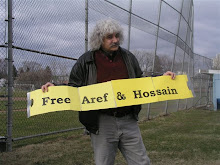


 Posts
Posts

